

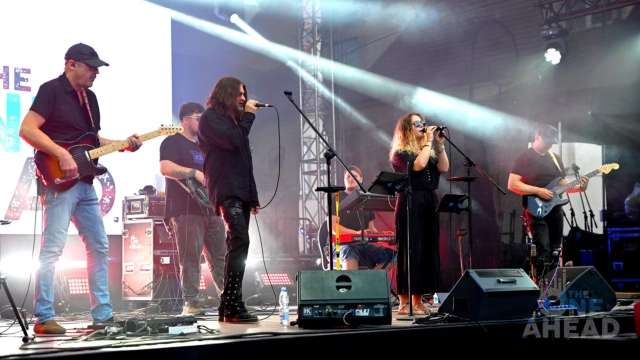

For the sound engineer
All information here: technical rider, stage plan, rack, equipment and microphones.

Dear sound engineer, to make your work easier and speed up the flow of information without involving the event Organizer, we have prepared basic technical information for you. It will help you prepare for our band’s sound reinforcement. Additionally, you will find here a Technical Rider which contains full information on what else we need.
- We have our own in-ear monitoring system (“ears / InEars”) with a Behringer WING Rack mixer. All inputs are split via three Behringer MS8000 splitters and a Behringer Ultra DI Pro. The output splitters and DI have a 3-meter XLR cable snake for connecting to front of house (FOH).
- We provide our own microphones and digital guitar effects processors. Guitars should be panned hard left and hard right stereo. Keyboards must be set to full stereo with hard L/R panning.
- IMPORTANT: Setting up and connecting all the band’s equipment on stage takes about 1.5 hours!
- IMPORTANT: The rack is dynamic, so changes, expansions, experiments, and optimizations are constantly being made. In practice, the actual setup may differ slightly from what is shown here.
Download riders
Select and download the technical rider in PDF format.
Download technical rider – electric Polish version (PDF)
Stage plan
Generally, we set up in two rows on stage: drums, bass, and keyboards on the backline, with guitars and vocals at the front. The rack for our IEMs/connections is positioned centrally in the back, ensuring all devices can be easily connected and remain highly accessible for any adjustments.
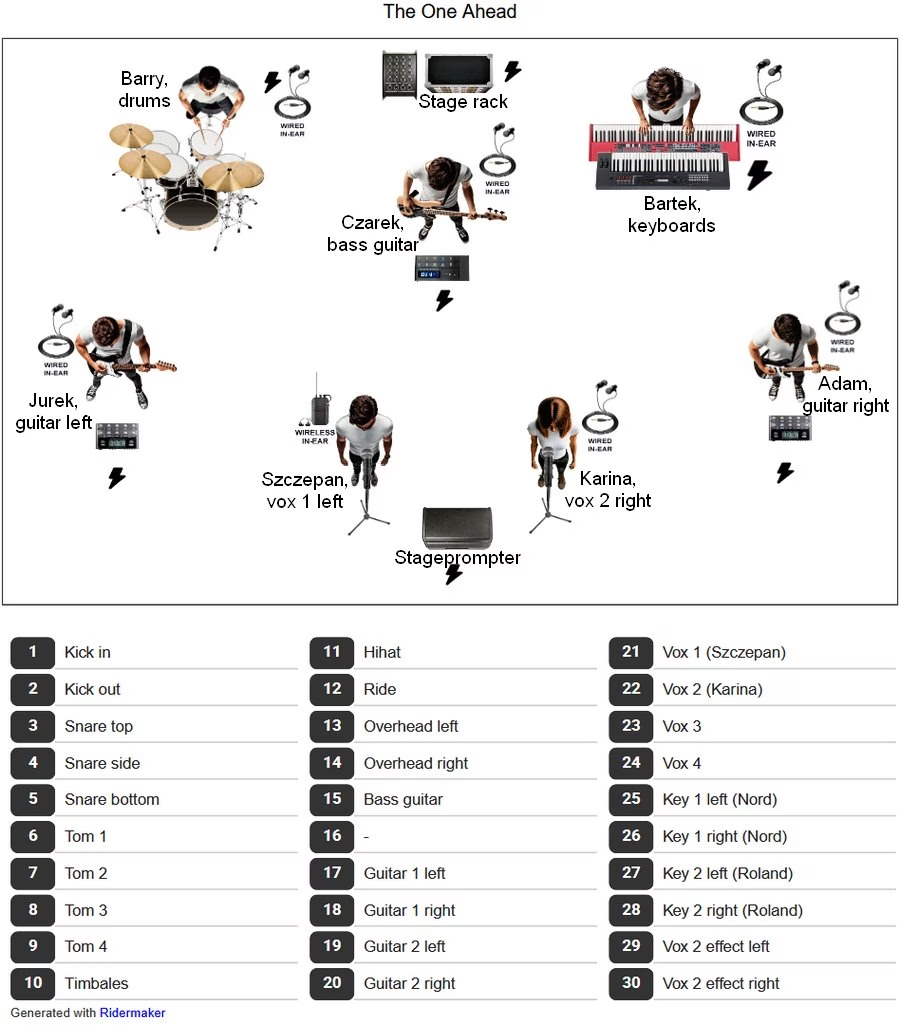
Monitor System and Stage Rack
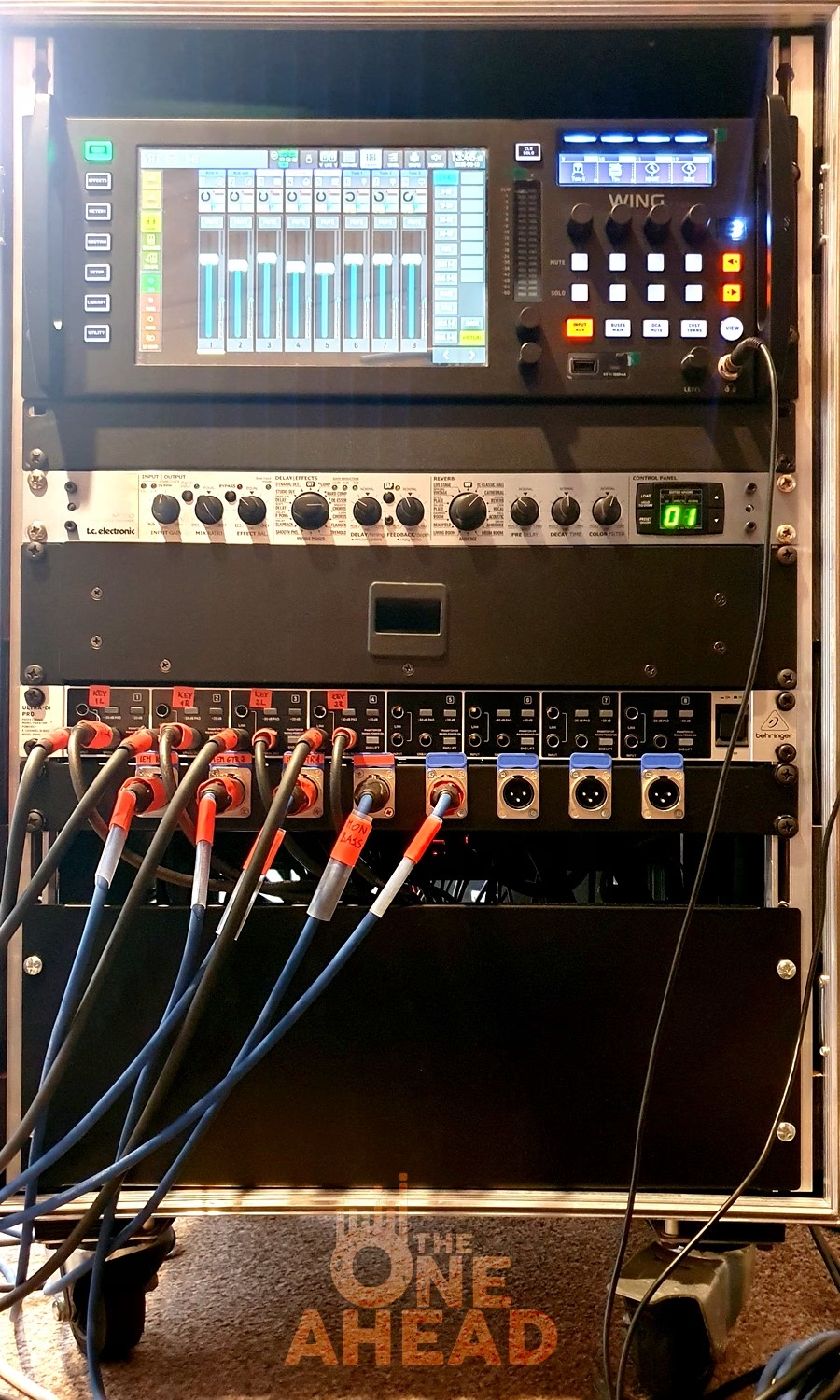
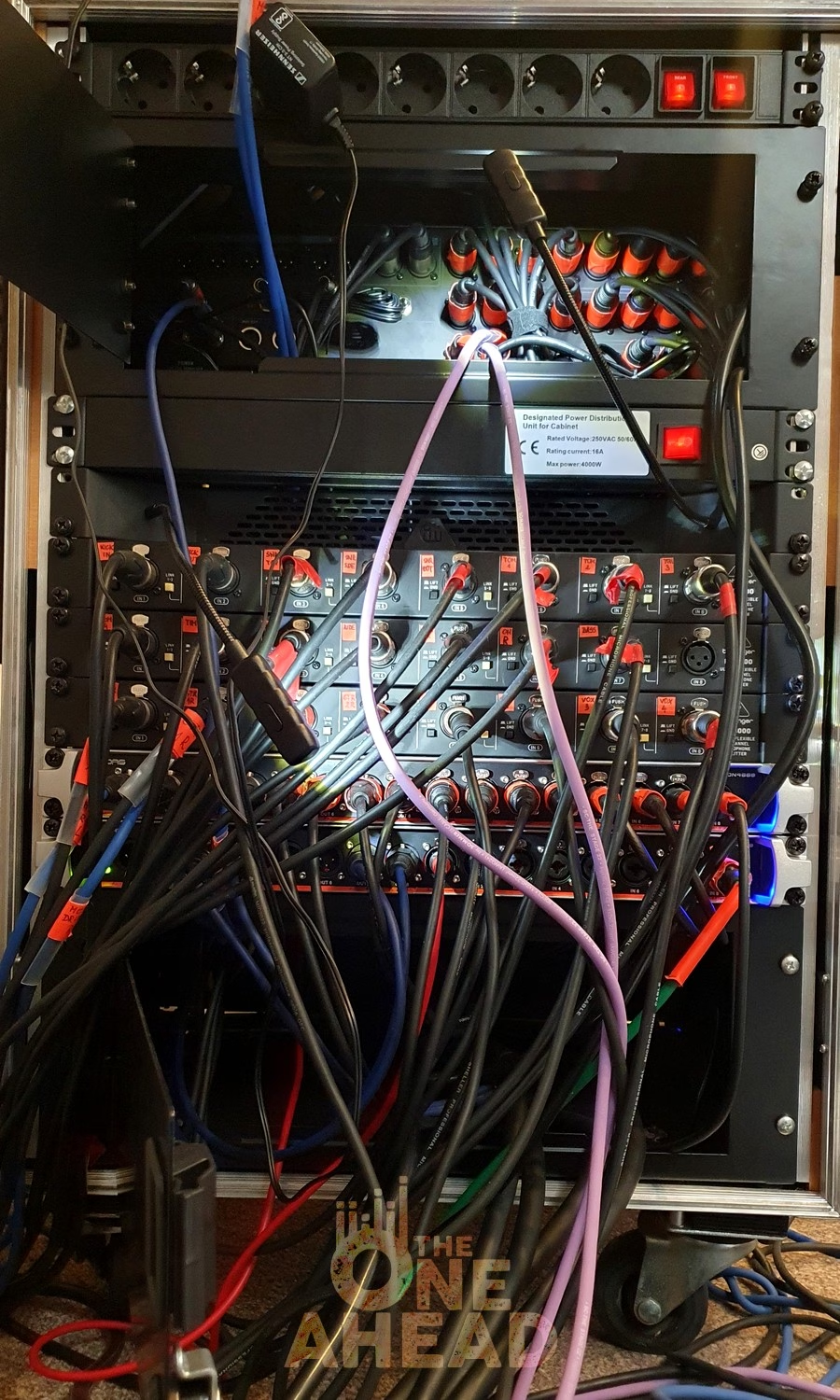
We have our own in-ear monitoring system (“ears / InEars (IEM)”) with a Behringer WING Rack mixer. All inputs are split via three Behringer MS8000 splitters and a Behringer Ultra DI Pro. The output splitters/rack and DI have a 3-meter XLR cable snake!
Rack view front:
Rack view back:
Microphones and other equipment
We provide our own microphones and digital guitar effects processors.
List of microphones and virtual devices:
| Channel | Nr. snake | Source | MIC/LINE |
| 1 | 1 | Kick in | AKG D112 |
| 2 | 2 | Kick out | Nie ma (jeśli potrzebne, to mikrofon po stronie firmy nagłaśniającej) |
| 3 | 3 | Snare top | Shure SM 57 |
| 4 | 4 | Snare side | Sennheiser e609 |
| 5 | 5 | Snare bottom | Shure SM 57 |
| 6 | 6 | TOM 1 | Beyerdynamic TG D58c |
| 7 | 7 | TOM 2 | Beyerdynamic TG D58c |
| 8 | 8 | TOM 3 | Beyerdynamic TG D57c |
| 9 | 1 | TOM 4 | Beyerdynamic TG D57c |
| 10 | 2 | Timbales | Shure SM 57 |
| 11 | 3 | HiHat | Lewitt LCT 040 MATCH |
| 12 | 4 | Ride | AKG C414 |
| 13 | 5 | Overhead left | Austrian Audio CC8 |
| 14 | 6 | Overhead right | Austrian Audio CC8 |
| 15 | 7 | Bass guitar | Zoom B3 |
| 16 | 8 | Empty | – |
| 17 | 1 | Guitar 1L (Guitar left Jurek) | Line 6 HELIX LT |
| 18 | 2 | Guitar 1R (Guitar left Jurek) | Line 6 HELIX LT |
| 19 | 3 | Guitar 2L (Guitar right Adam) | Line 6 POD Go |
| 20 | 4 | Guitar 2R (Guitar right Adam) | Line 6 POD Go |
| 21 | 5 | VOX 1 (Szczepan) | AKG D7 |
| 22 | 6 | VOX 2 (Karina) | AKG D7 |
| 23 | 7 | VOX 3 | – |
| 24 | 8 | VOX 4 | – |
| 25 | 1 | KEY 1L Nord | D.I. BOX |
| 26 | 2 | KEY 1R Nord | D.I. BOX |
| 27 | 3 | KEY 2L Roland | D.I. BOX |
| 28 | 4 | KEY 2R Roland | D.I. BOX |
| 29 | 5 | VOX 2 effect left | – |
| 30 | 6 | VOX 2 effect right | – |
| 31 | 7 | Empty | – |
| 32 | 8 | Empty | – |